
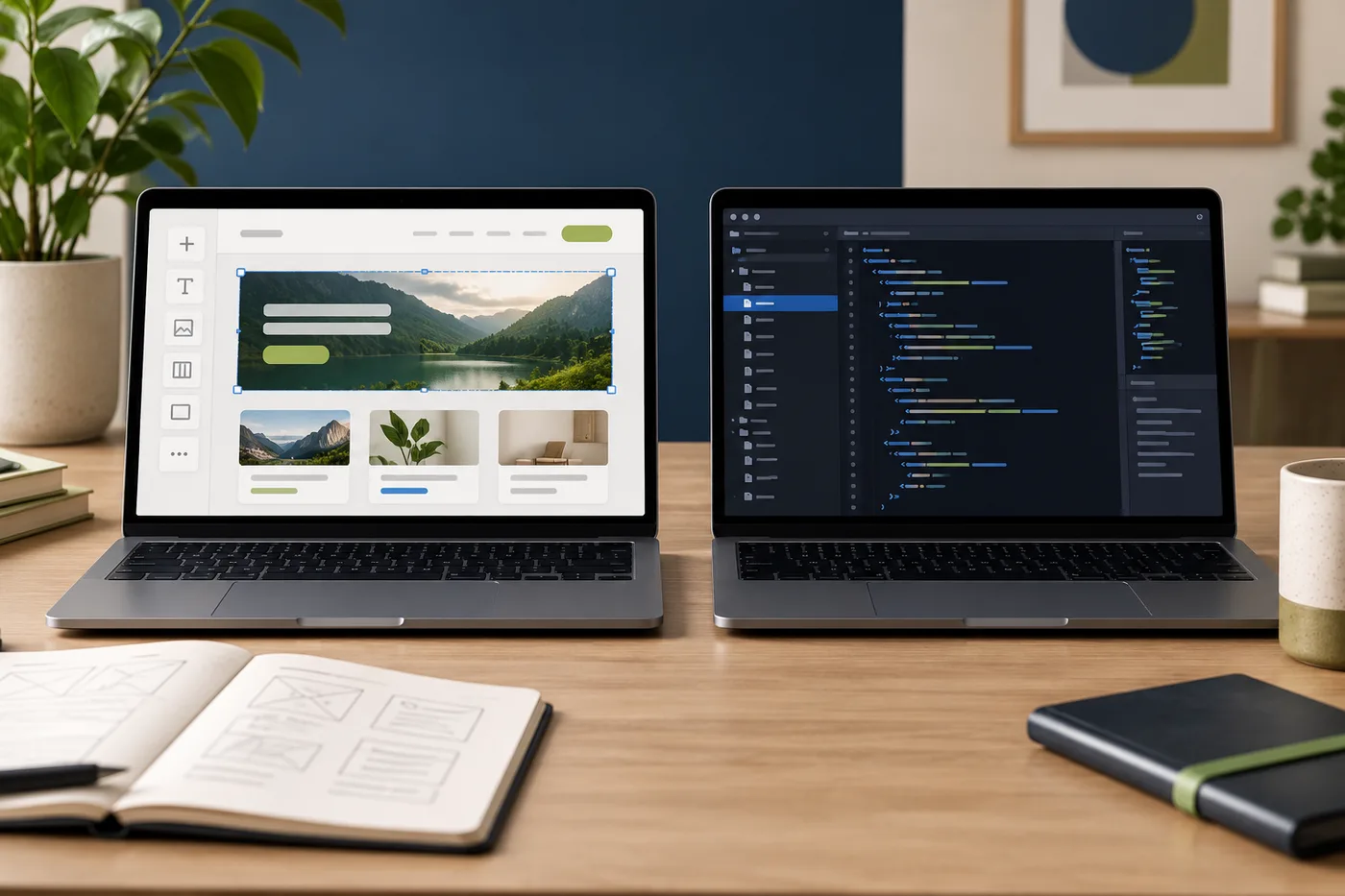
Choosing a website platform can feel like a technical decision, but it is also an ownership decision. Who will change the text? How much control does the design need? Which integrations are essential? Answer these before comparing tool names.
Website builders: quick editing with trade-offs
Hosted builders can make a simple site easier to launch and edit. They may suit a small set of pages and standard features. Check how flexible the design is, what happens if you outgrow the plan, how content and assets can be exported, and whether the subscription includes the tools you need.
Content management systems: useful for frequent publishing
A CMS can help when several people publish or maintain many pages. It brings an editing workflow and often an ecosystem of extensions. That flexibility creates upkeep: updates, permissions, backups, compatibility checks, and a plan for extensions that become unsupported.
Custom code: control with clear responsibility
Custom development can fit a distinct design, performance need, or integration. It does not remove maintenance. Someone still needs to own the source files, arrange updates, review changes, and manage hosting. Confirm the handover plan before work starts.
Compare the real requirements
List essential pages, who edits them, needed forms or integrations, accessibility needs, content export, and expected maintenance. Separate launch requirements from ideas that can wait. Compare total costs over time: subscriptions, extensions, hosting, support, migration, and staff effort.
Try a realistic task
Ask the person who will own the site to update a service description, add an image, and check the result on mobile. A platform that looks powerful in a demo may be difficult for the real editor. Test the work that will happen every month.
If the choice is still unclear, begin with the smallest platform that meets the important requirements and leaves a practical upgrade path. See our website design and technology approach pages.
This guide is general information. Make decisions based on your own needs, data, and operating requirements.